
AI Agents for HR
Your HR team answers the same leave, payroll and benefits questions all week. We build AI agents for HR that take those requests, check your policies and records, finish the work, and pass anything sensitive to a person. We build them on Salesforce Agentforce, connect them to your HRIS and payroll, and set the guardrails before anything goes live. The agent works inside your systems and in the channels your employees already use.
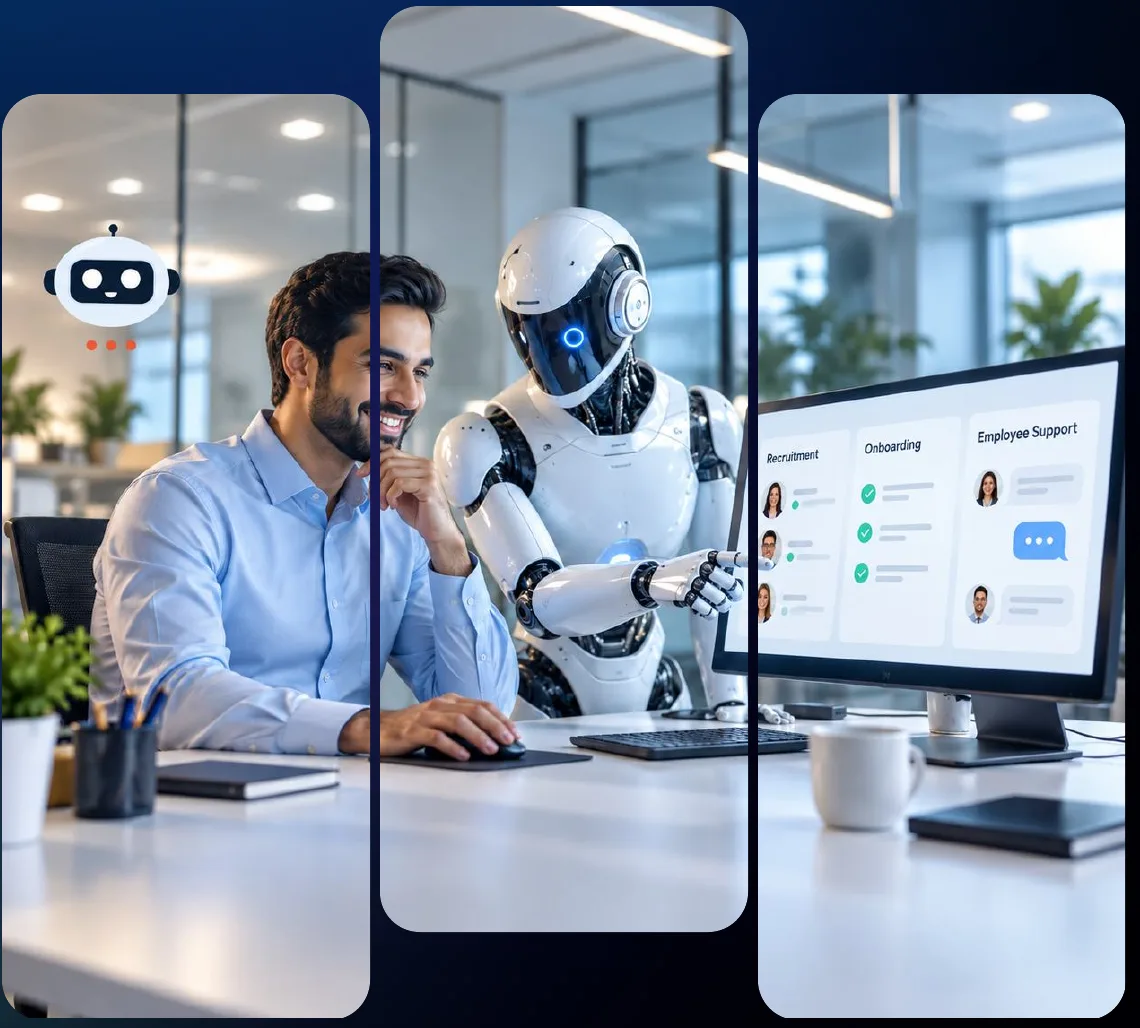

What Are AI Agents for HR?
AI agents for HR are software that takes an HR request or goal, reads context from your connected HR systems, completes the multi-step work, and hands anything sensitive to a person. They answer a policy question, file a leave request and route the approval without a ticket waiting in a queue.
AI agents for human resources work on both sides of the desk. Employees ask in Slack, Teams or a portal and get an answer or an action. HR specialists get cases that arrive with the context already attached. Take a parental leave request. An employee writes, “I need to plan leave for the spring.” The agent checks the policy for the employee’s country and tenure, confirms the leave balance, opens the request, routes it to the manager and updates the HRIS. If the employee mentions a medical complication, the agent stops and passes the case to an HR specialist with the full conversation attached.
What You Get With Our HR AI Agent Implementation
VALiNTRY360 helps you move from identifying HR automation opportunities to deploying AI agents on Salesforce Agentforce. We define the scope, deliverables, and responsibilities so your HR and IT teams know what to expect.
Defined HR Use Cases
A documented scope of employee requests, automated actions, and processes that require human involvement.
Integration and Access Plan
A clear mapping of connected HR systems, employee data access, and approved agent actions.
Configured Agentforce Solution
AI agent topics, actions, employee communication channels, and escalation workflows aligned with your HR requirements.
Testing and Launch Documentation
Validation of agent responses, integrations, access controls, and exception handling before deployment.
Performance and Support Plan
Agreed success metrics, monitoring responsibilities, and a process for updating workflows after launch.
Each deliverable is aligned with your HR priorities, existing systems, and approved implementation scope.
Our AI Agent Services for HR
VALiNTRY360 helps HR teams plan, build, deploy, and manage AI agents on Salesforce Agentforce. Whether you need employee self-service automation or custom HR workflows, our services cover implementation, integration, and ongoing support.
HR AI Readiness and Consulting
We assess your HR processes, existing systems, and automation opportunities to define suitable use cases and implementation priorities.
Salesforce Agentforce Implementation
We configure AI agents for employee requests, HR case management, approvals, and other supported workflows.
Custom HR AI Agent Development
We build custom agent actions and workflows tailored to your HR policies, business rules, and operational requirements.
HRIS and Payroll Integration
We connect agents with platforms such as Workday, SAP SuccessFactors, and ADP to support approved data access and HR transactions.
AI Agent Security and Governance
We configure access controls, escalation rules, human approvals, and testing procedures to protect sensitive employee information.
HR AI Agent Monitoring and Optimization
We review agent performance, resolve workflow issues, update configurations, and improve automation after deployment.
From an initial HR automation project to broader Agentforce adoption, we help you deploy AI agents that support your existing workforce and HR operations.
AI Agents vs HR Chatbots vs HR Automation
The three get mixed up in vendor demos. This is how they differ in daily HR work.
HR chatbot
HR automation
HR AI agent
What it does with a request
Answers the question
Runs the steps someone scripted
Works out what the request needs, then does it
Multi-step work across systems
Hands off to a person
Yes, if the path is fixed
Plans the steps itself
Messy or unstructured requests
Limited
Fails or routes to a form
Interprets the intent
Who defines the steps
The content team
An admin or developer
An admin sets goals, actions and guardrails. The agent picks the sequence.
Where humans step in
Always, to do the work
On exceptions the rules missed
At set escalation points, with context passed along
Example
Shows the leave policy
A form routes the request to the manager
Checks balance and policy, files the request, flags conflicts
HR Challenges Our AI Agents Handle
We scope each agent to processes where your rules are clear, then define where a person takes over. For needs beyond HR, our AI agent development team builds custom agents on the same foundation.
Your HR Challenge
Our AI Agent Solution
Value to Your Business
High Volume of Employee Questions
Automates responses to routine HR policy, benefits, and employee service questions using approved information.
Reduces repetitive inquiries and helps employees find answers faster.
Slow Leave Approvals
Automates leave balance checks, request submissions, and manager approval routing.
Reduces administrative follow-ups and improves request handling.
Manual Employee Onboarding
Coordinates onboarding documentation, orientation scheduling, reminders, and approved IT requests.
Reduces coordination work and creates a more consistent onboarding experience.
Repetitive Payroll Inquiries
Provides permitted pay statement explanations and benefits guidance while routing disputes to payroll specialists.
Reduces routine support workload and helps specialists focus on complex issues.
Unorganized HR Support Requests
Classifies incoming cases, prepares summaries, and routes requests to the appropriate HR specialists.
Improves case organization and reduces manual triage.
Time-Consuming Recruitment Coordination
Automates interview scheduling, candidate communications, and approved applicant record updates.
Reduces administrative work and gives recruiters more time for candidate engagement.
Ready to reduce manual HR work?
Tell us which HR processes consume the most time. We’ll help identify suitable Agentforce automation opportunities for your business.
How AI Agents for HR Work
Every HR AI agent we build runs on four layers. Each one answers a question your security team will ask.
01
Context
The agent reads from your HRIS, policy library and case history, so it answers with your rules and your employee’s record. A leave question pulls the balance, the country policy and the manager. Without this layer the agent guesses, and an HR agent should never guess.
02
Reasoning
It reads the request, picks the topic and plans the steps. “Can I carry over vacation days?” becomes a policy lookup, a balance check and a plain answer. When the request is vague, the agent asks one clarifying question before it acts.
03
Guardrails
Admins define what the agent may do, what it must never decide and when it hands off. Pay changes and disciplinary matters always go to a person. These rules live in configuration your HR leaders can read.
04
Action
The agent carries out the steps through approved actions: file the request, update the record, notify the manager, open a case. It can only do what an admin has listed, and every action is logged.
How We Build HR Agents on Salesforce Agentforce
VALiNTRY360 implements AI agents for HR using Salesforce Agentforce for HR Service. We configure the platform around your HR policies, employee data, and approval workflows to support secure employee self-service and HR operations.
Component
What Salesforce Provides
What VALiNTRY360 Configures
Agent Topics and Actions
Agentforce capabilities for handling HR requests and executing approved actions.
Custom topics and actions for leave requests, policy questions, approvals, and HR workflows.
Employee Self-Service
Employee portals through Experience Cloud and support for channels such as Slack and Microsoft Teams.
Employee access, conversational workflows, and channel configurations based on your requirements.
HR Case Management
HR service console capabilities for managing employee requests and cases.
Case routing, escalation workflows, and HR specialist handoffs.
HRIS and Payroll Integration
Integration capabilities through MuleSoft and Salesforce Data 360.
Connections to HRIS and payroll systems, data mapping, and approved employee record access.
Security and Governance
Salesforce security, permissions, and platform monitoring capabilities.
Role-based access, agent guardrails, approval controls, and audit configurations.
Custom HR Capabilities
Core employee service and self-service functionality.
Additional workflows for recruiting support, reporting, and other HR requirements where supported and approved.
Available capabilities depend on Salesforce licensing, configuration, and integration requirements. We confirm these during discovery and identify which workflows need custom development. Our Agentforce for Service services support customer-facing workflows, while our Agentforce Quickstart provides an accelerated implementation option for suitable use cases.
HR Systems and Channels We Connect
The agent is only as useful as the systems it can reach. We connect to the platforms your HR team already runs.
HRIS
Workday and SAP SuccessFactors. The agent reads job, location, tenure, manager and leave balance, and writes only the changes you approve, such as a leave request.
Payroll
ADP. The agent reads pay statements and benefits enrollment data to explain them. Changes stay with your payroll team.
Channels
Slack and Microsoft Teams. Employees ask where they already work, and the same agent answers in both.
Employee portal
Salesforce Experience Cloud. We built a partner portal on Experience Cloud for Ubicquia, replacing paper-based partner transactions. The same pattern carries an employee portal.
Access
Single sign-on and multi-factor authentication, with real-time data sync.
Where a system has no ready connector, we build the connection with MuleSoft. Tell us your stack and we confirm what we can integrate in discovery.
Security, Compliance, and Human Oversight
HR data is personal, so we design access and oversight before we design conversations. We also ground the agent in your policy library, so it answers from your documents.
Role-based access.
The agent sees only what the person asking may see. Our guide to security and access controls for AI in Salesforce covers the pattern.
Decisions the agent never makes.
Hiring, firing, pay changes and discipline stay with people.
Audit logs.
Every action the agent takes is recorded and reviewable, so you can answer “what did the agent do and why” for any case.
Testing on sensitive cases.
Before launch we run scenarios such as harassment reports and pay disputes and confirm the agent escalates every time.
Escalation rules.
Sensitive topics such as medical leave, harassment and grievances go straight to a person.
Ownership.
Each agent has a named owner on your side. Our Agentforce governance framework sets out who approves changes and who reviews escalations.
Employment AI counts as high-risk under the EU AI Act, and several US states, Colorado among them, are writing their own rules. We design with human review and record keeping in mind and confirm the current rules for your jurisdictions with your legal team.
Benefits and Results You Can Measure
We agree on the measures before build and baseline them before launch. These are the five we track.
Measure
What it shows
Published reference
Your result
Self-service resolution rate
Share of requests solved without an HR specialist
Salesforce’s own HR team reports 96% with Agentforce (company-reported, 2025)
[x]
Time to resolve
How fast an employee gets an answer or an action
None cited
[x]
HR case volume
Tickets reaching your specialists each month
None cited
[x]
Employee satisfaction
Rating of agent conversations
None cited
[x]
Hours returned to HR
Specialist time moved to complex cases
IBM reports its AskHR agent handles 10.1 million interactions a year (company-reported)
[x]
The published figures are vendor-reported. Treat them as a reference point, and judge the agent against your own baseline.
Before launch we pull recent HR case data to set that baseline. We also define “resolved” with you up front, for example no reopened case within a set number of days. Without that definition, a resolution rate means nothing.

Highmark Health: Managing Ideas Across a 35,000-Employee Workforce
We implemented Salesforce Sales Cloud to centralize employee innovation ideas, streamline review workflows, and improve reporting. The solution now supports 300+ executive-level users with visibility into project statuses and financial projections.
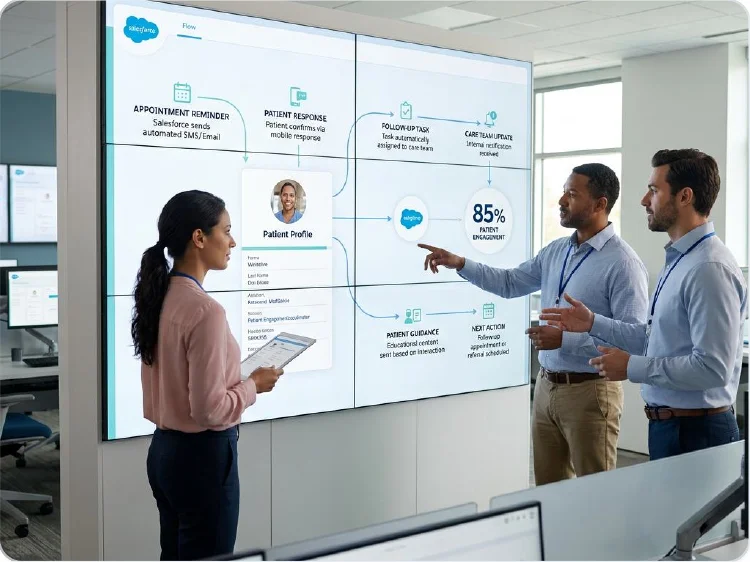
TrialSpark: 77% Reduction in Support Resolution Time
We implemented Salesforce Service Cloud with automated case routing, escalation workflows, and connected systems. The solution reduced support ticket resolution time by 77% and saved 20 hours per patient enrollment.
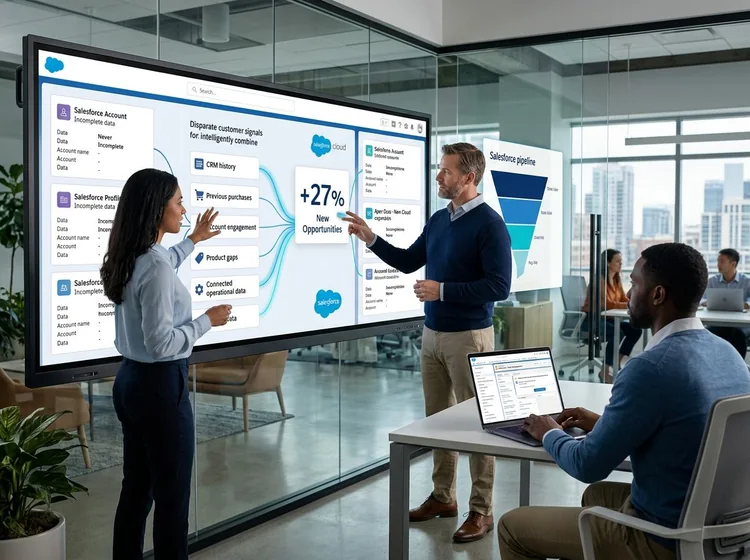
BIC Graphic: 7 Minutes Saved per Customer Interaction
We connected Salesforce Sales Cloud and Service Cloud with BIC Graphic’s ERP system to improve workflow efficiency and information access. The implementation reduced average customer service handling time by seven minutes.
Is Your HR Team Ready for an AI Agent?
Gartner expects over 40% of agentic AI projects to be canceled by the end of 2027. Teams usually stall on process and data. Five questions tell you where you stand.
01
Can you list your top 10 HR requests and how each is resolved today? If not, the agent has nothing to learn from.
02
Are your policies current, in one place and clear enough to quote? An agent repeats whatever your documents say, including the contradictions.
03
Does one system hold clean employee records for role, location, tenure and manager? Leave rules depend on these fields.
04
Who owns the agent after launch, including policy updates and escalation reviews? Agents without an owner drift.
05
Do you know which cases must always go to a person? These become your guardrails.
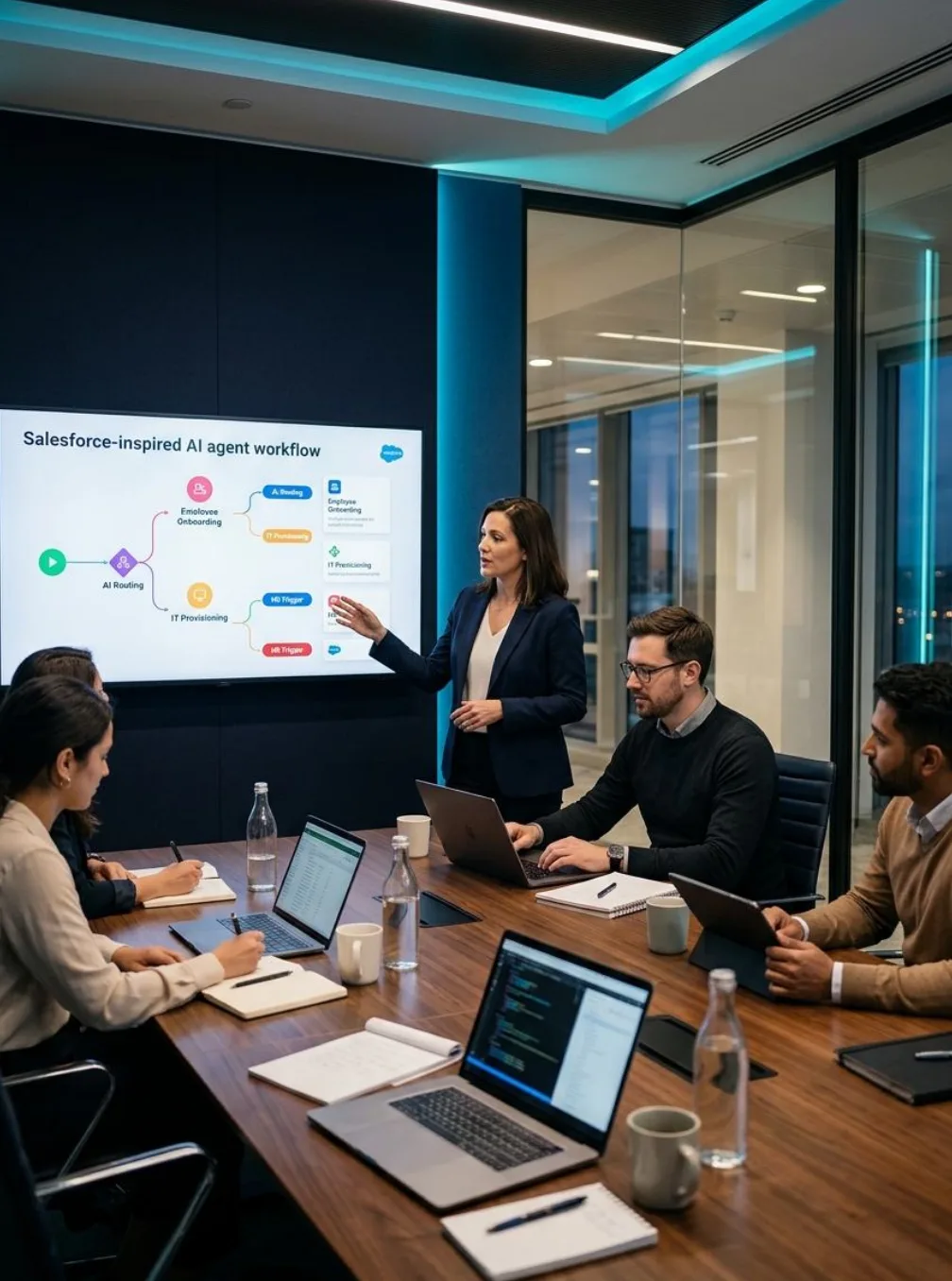
Answer no to more than two and fix those first. If your policies live in a dozen email threads, start with a policy cleanup. If nobody owns HR operations data, name an owner. We would rather tell you now than after a failed pilot.
Our Implementation Process
VALiNTRY360 follows a structured six-step implementation process to take your HR AI agent from initial planning to deployment and ongoing optimization. The readiness assessment establishes the project scope, while each stage defines the required configurations, deliverables, and responsibilities to support a controlled implementation.
01
Readiness Assessment and Planning
We assess your HR processes, employee requests, connected systems, and internal policies to identify automation opportunities and define success measures. Your team provides relevant policy documents, sample HR requests, and access to key stakeholders.
02
System Integration and Data Access
We connect your HRIS, payroll applications, and employee communication channels using appropriate integration methods. Our specialists configure role-based permissions and data access controls based on approved requirements. Your team provides system access and a designated security contact.
03
Customization and Workflow Configuration
We configure HR agent topics, supported actions, business rules, security guardrails, and escalation workflows based on your organization’s requirements. Our team validates the configurations with designated HR stakeholders before proceeding. Your HR leads review and approve the workflows.
04
Pilot Deployment
We introduce the HR agent to a selected employee group and test its responses, actions, and escalation behavior against representative HR requests. Our Agentforce testing guide explains our approach to controlled AI testing. Your team identifies pilot users and provides feedback.
05
Monitoring and Optimization
We review agent performance, escalations, employee feedback, and agreed success measures to identify improvement opportunities. Our specialists refine workflows, update knowledge content, and address identified issues. Your HR team provides ongoing feedback to support continuous improvement.
06
Change Management and Training
We prepare HR teams and managers to work with the new AI agent through role-specific training, user guidance, and adoption support. Our specialists help coordinate employee communications and operational handover. Your organization appoints an internal sponsor to support adoption across teams.
100+ Salesforce Certifications Behind Your Agentforce Success
Your HR AI solution deserves experienced hands. With 100+ Salesforce certifications across our team, VALiNTRY360 brings expertise in Agentforce, Salesforce architecture, integrations, and automation. Our specialists help you build secure, scalable HR AI agents that fit your existing systems and business needs. Learn more about our experts on our About Us page.
AI Agents for HR
FAQ by VALiNTRY 360
An AI agent for HR is software that handles employee requests using connected HR systems and company policies. It can answer questions, submit leave requests, route approvals, and escalate sensitive matters to HR specialists when human involvement is required.
An HR chatbot primarily answers questions or follows predefined workflows. An HR AI agent can interpret requests, retrieve information, and execute approved actions across connected systems. It also escalates situations requiring human judgment or additional authorization.
AI agents can handle policy questions, leave requests, onboarding tasks, benefits inquiries, interview scheduling, and HR case routing. VALiNTRY360 configures these workflows around your existing systems, approval requirements, and processes that require human intervention.
No. AI agents support HR professionals by handling repetitive administrative requests and routine workflows. Your HR team remains responsible for sensitive employee matters, hiring decisions, compensation changes, disciplinary actions, and situations requiring professional judgment.
The HR agents we configure do not make independent hiring decisions. They can coordinate interviews, answer candidate questions, and support administrative recruiting tasks. Candidate evaluation, shortlisting, and final selection remain under human oversight.
Connecting AI agents to sensitive HR systems requires appropriate security controls. VALiNTRY360 configures access permissions, approved actions, and escalation procedures while testing integrations and data handling before deployment. Your security team reviews the proposed controls.
Our AI agents can integrate with HRIS platforms such as Workday and SAP SuccessFactors, payroll systems such as ADP, and communication channels including Slack and Microsoft Teams. Integration capabilities depend on available APIs, permissions, and system configurations.
A suitable initial deployment through our Agentforce Quickstart typically takes 2–4 weeks. More complex implementations involving multiple HR systems, custom workflows, and security requirements take longer. We establish the project timeline during the readiness assessment.
We measure performance through self-service resolution rates, request handling time, HR case volume, employee satisfaction, and time saved on administrative tasks. Results are compared with agreed baseline metrics to evaluate improvements after deployment.
Salesforce Agentforce for HR Service enables organizations to support employee requests through AI-powered self-service and HR case management. VALiNTRY360 configures Agentforce capabilities, connects approved HR data sources, and develops workflows suited to your business requirements.
No. In many cases, AI agents can work alongside your existing HRIS rather than replace it. We assess the available integration options and connect Agentforce to approved employee information and workflows where supported.
We recommend starting with high-volume, rules-based requests such as policy questions, leave inquiries, and onboarding support. VALiNTRY360 evaluates your current processes, data readiness, and approval requirements to identify suitable use cases for an initial deployment.
When an agent cannot complete a request or encounters a sensitive issue, it follows configured escalation rules. The case is transferred to an authorized HR specialist with relevant information, subject to privacy and access controls.
Implementation costs depend on the number of workflows, Salesforce licensing, HRIS integrations, customization, security requirements, and ongoing support. VALiNTRY360 assesses your environment and defines the scope before preparing an implementation proposal tailored to your requirements.
VALiNTRY360 can provide ongoing monitoring, workflow updates, integration troubleshooting, and agent performance optimization. We review unresolved requests, identify improvement opportunities, and help maintain agent configurations as your HR policies and operational requirements change.