
Salesforce Lightning Development Services
Modernize your Salesforce experience with Lightning‑native development

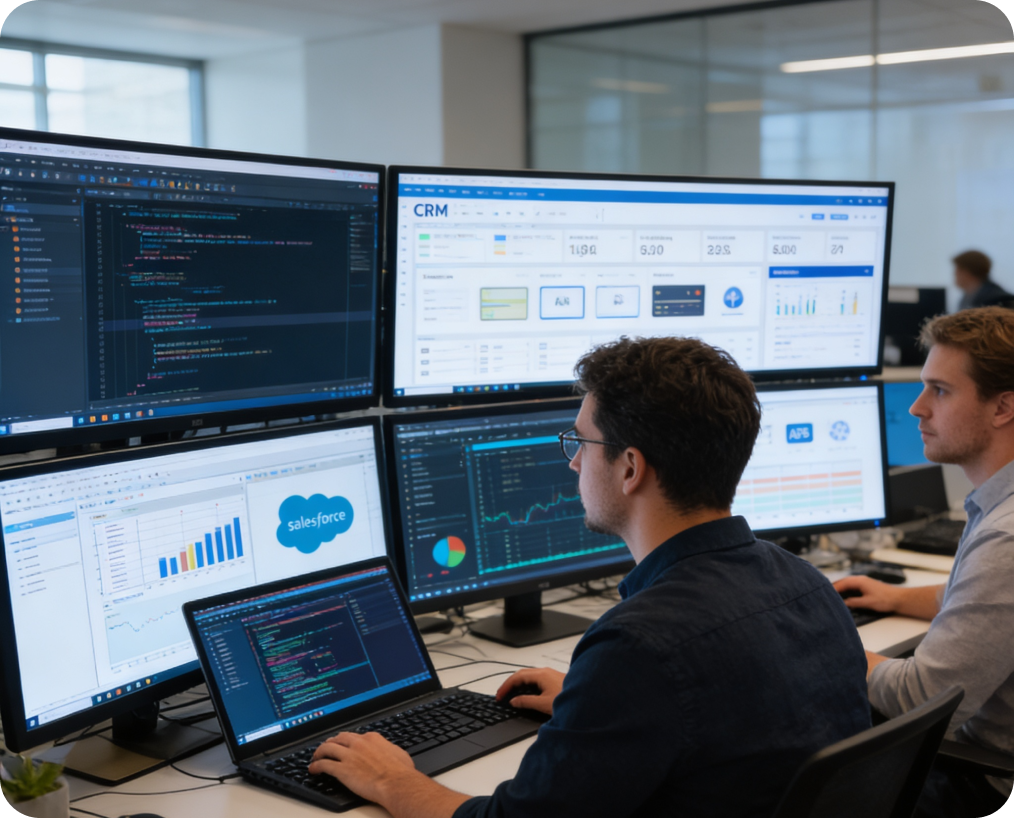
Salesforce Lightning Development Services for Modern CRM Experiences
Salesforce Lightning Development Services help businesses modernize outdated Salesforce environments into faster, cleaner, and more scalable CRM experiences built around real user workflows. VALiNTRY360 designs and develops Lightning-native applications, Lightning Web Components (LWCs), dynamic Lightning pages, and custom Salesforce UI experiences that improve usability, workflow efficiency, and long-term platform maintainability. Our Salesforce Lightning development consultants help organizations streamline operations, modernize Salesforce Classic environments, reduce technical debt, and create AI-ready Salesforce ecosystems that support stronger adoption, faster sales execution, and more connected Salesforce solutions across Sales, Service, Health, Manufacturing, and enterprise operations.
Our Comprehensive Salesforce Lightning Development Offerings
We build modern, reusable Lightning Web Components that deliver fast, secure, and maintainable UIs across your Salesforce org.
- Component-based architecture for scalable, modular UIs
- Reusable UI elements to reduce duplication and effort
- Performance-optimized rendering for faster page loads
We help you move from legacy Aura components to Lightning Web Components with minimal disruption to users and workflows.
- Seamless transition that preserves existing functionality
- Reduced technical debt and maintenance overhead
- Future-ready component stack aligned with Salesforce standards
We design and configure custom Lightning pages and apps that match how your teams actually work, not how Salesforce is configured by default.
- Role-based record pages tailored to user personas
- Dynamic home pages with relevant KPIs and actions
- App-specific Lightning experiences for key processes
We optimize your Lightning interface for clarity, speed, and consistency so users can work faster on both desktop and mobile.
- Responsive Lightning layouts for all device types
- Intuitive navigation that reduces clicks and friction
- Lightning Design System alignment for clean, branded UI
We extend Lightning components to connect with backend logic, external systems, and AI capabilities so your UI stays in sync with your data.
- Apex-backed components for complex business logic
- Third-party API integration for real-time data sync
- Einstein AI and MuleSoft connectivity for intelligent workflows
We deliver industry-tailored Lightning solutions that embed domain-specific logic and workflows directly into the UI.
- Manufacturing CPQ workflows for faster quoting and approvals
- Healthcare patient portals for seamless care coordination
- Retail order and service management for unified customer journeys
When Businesses Need Salesforce Lightning Development Services
Many businesses reach a point where their Salesforce setup slows teams down instead of supporting them. Salesforce Lightning Development Services become useful when older interfaces, complex layouts, and outdated components start affecting adoption, speed, and daily productivity.
- Outdated Salesforce Classic Experience
- Low User Adoption and Workarounds
When users depend on spreadsheets, manual notes, or external tools, the CRM experience is not supporting their work properly. Lightning development improves usability, reduces friction, and makes Salesforce easier for sales, service, and operations teams to use daily.
- Heavy Customization and Technical Debt
Older Aura components, outdated configurations, and complex custom interfaces can increase maintenance effort. Salesforce Lightning development services help clean up technical debt with Lightning Web Components, scalable architecture, and more manageable user experiences.
- Need for AI, Automation, and Growth
Businesses planning AI, automation, mobile access, or deeper integrations need a stronger Salesforce foundation. VALiNTRY360 helps modernize Salesforce with Lightning-native development that supports future workflows, better data use, and long-term CRM scalability.
How We Modernize Salesforce with a Clear Process
01
Discovery & Assessment
We review your current Salesforce setup, user roles, and usage patterns to identify gaps, risks, and the highest-impact areas for Lightning upgrades and migration.
02
Strategy & Roadmap
We define a clear plan for Salesforce Lightning development solutions, including LWC architecture, component standards, and a phased roadmap aligned to your timelines and priorities.
03
Design & Prototyping
We create wireframes and early LWC prototypes to validate layouts, workflows, and UX patterns early so stakeholders can confirm direction before full build.
04
Development & Testing
We build Lightning components, pages, and apps using proven development practices, then run unit tests and component testing to support stability, security, and performance.
05
Deployment & Optimization
We roll out in phases, monitor adoption and performance, and optimize Lightning pages and components to keep the user experience fast and consistent.
06
Training & Support
We provide role-based training, practical enablement, and ongoing support so teams adopt changes smoothly and your Lightning environment stays stable and optimized over time.
Where Teams Get Stuck and How We Help
1/8
Slow, Clunky User Interfaces
The Challenge: Salesforce Classic and older Aura components can feel slow or requiring excessive clicks, which reduces productivity and user confidence.
Our Solution: We rebuild key screens with LWC and Lightning Experience so pages load faster, flows are simpler, and the UI matches real workflows.
2/8
Poor Mobile and Responsive Experience
The Challenge: Classic layouts and older components often do not work well on modern devices, which hurts adoption for field and remote teams.
Our Solution: We deliver responsive Lightning pages and components that work consistently across desktop, tablet, and mobile.
3/8
High Maintenance of Aura/Visualforce Code
The Challenge: Aura and Visualforce customizations can be harder to maintain, riskier to change, and costly to support over time.
Our Solution: We migrate Aura and Visualforce to Lightning Web Components to reduce technical debt and create a cleaner, more maintainable codebase.
4/8
Low User Adoption and Engagement
5/8
Inability to Deliver Personalized Experiences
The Challenge: Legacy screens often fail to surface context-aware data and actions for different roles, which limits personalization.
Our Solution: We build Lightning components that show relevant fields, actions, and guidance based on role, record type, and stage.
6/8
Difficulty Integrating Modern Web Standards
The Challenge: Classic and older components limit the use of modern web patterns, which restricts UI flexibility and extensibility.
7/8
Migration Delays and Project Risk
The Challenge: Classic-to-Lightning projects can slip due to unclear scope, testing gaps, and change management issues.
Our Solution: We use phased rollouts, structured testing, and clear migration plans to reduce risk and avoid disruption.
8/8
Rising Operational and Licensing Costs
The Challenge: Keeping legacy interfaces often increases support effort, rework, and operational overhead tied to poor usability.
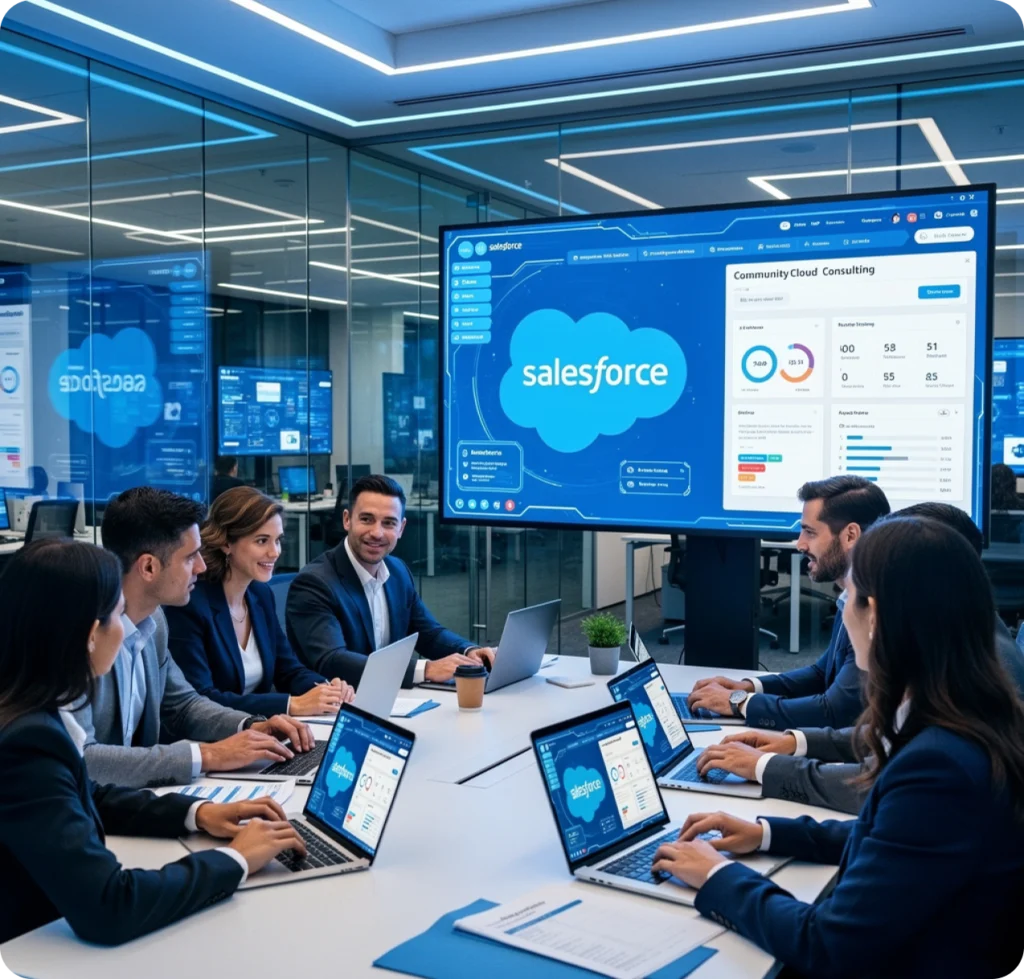
How Lightning Development Supports Better Workflows
Salesforce Lightning Development services help turn your CRM into a faster, cleaner platform that users actually want to use. These four areas show how Lightning improves experience, speeds daily work, supports maintainability, and drives clear business value.
Modern, User-Centric CRM Experience
1/4Lightning development improves how users interact with Salesforce by replacing dated screens with role-based experiences built for real work.
- Replace Classic pages with fast, clean Lightning record and home pages.
- Deliver role-based layouts that match how teams handle daily tasks.
- Improve usability across desktop and mobile to support steady adoption.
Faster, More Efficient Workflows
2/4Lightning-focused design reduces friction and manual steps so teams complete work faster and with fewer handoffs.
- Reduce clicks with optimized consoles and streamlined page layouts.
- Add UI-based automation for approvals, routing, and quick updates.
- Surface the right data and actions at the right time for decisions.
Future-Proof, Maintainable Architecture
3/4With LWC and modern standards, teams get a scalable base that stays aligned with Salesforce platform direction.
- Use LWC for reusable, modular UI built on modern web standards.
- Reduce reliance on Aura and Visualforce to lower maintenance effort.
- Align to Salesforce product updates for longer-term stability.
Business Growth and Measurable ROI
4/4Lightning upgrades improve productivity and user outcomes by making Salesforce easier to use and more aligned to business goals.
- Improve sales execution and case handling through clearer, faster UI.
- Reduce support overhead with standardized components and patterns.
- Support personalized experiences that improve customer and user results.
Benefits You Get from Our Lightning Delivery
VALiNTRY360’s Salesforce Lightning Development services improve speed, adoption, and day-to-day efficiency while reducing long-term support risk. Our team combines deep Salesforce expertise with a business-first approach so your Lightning work supports real outcomes and usable Salesforce solutions.
- Faster page performance and stronger day-to-day user adoption
- Lower build effort using reusable Lightning components and patterns
- Mobile-ready pages that support field teams and remote users
- Clear ROI through smoother workflows and better sales execution
- LWC-based architecture that supports long-term maintainability
- Full lifecycle support from planning and build to ongoing care
Our Lightning Development Tech Stack
Lightning Web Components (LWC) Framework
We use LWC to build fast, modular, reusable UI that supports long-term maintainability and consistent performance for Salesforce Lightning development solutions.
Apex, SOQL, SOSL
Our developers write clean Apex and optimized SOQL/SOSL to support complex logic, reliable data handling, and responsive Lightning experiences across Salesforce Lightning solutions.
Lightning Design System (SLDS) UI
We apply SLDS to keep Lightning pages consistent, brand-aligned, and easy to use across apps, consoles, and record pages.
VS Code + Salesforce Extensions
We develop in VS Code with Salesforce extensions for efficient coding, debugging, and deployments, helping keep delivery predictable and code quality high.
Git, CI/CD Pipelines (e.g., Copado, Gearset)
We use Git and CI/CD to automate testing and releases, supporting repeatable deployments and controlled change management for Salesforce solutions.
REST/SOAP APIs
We connect Lightning components to external systems using REST and SOAP APIs, supporting real-time data exchange and integrated workflows.
Platform Events Workflows
We use Platform Events to trigger near real-time actions and decouple systems, supporting event-driven automation across the Salesforce platform.
MuleSoft
We integrate Lightning apps with MuleSoft to coordinate data flows across Salesforce, ERP, and enterprise systems in a scalable, governed way.
What You Get with Our Salesforce Lightning Development Services
VALiNTRY360 delivers Salesforce Lightning development solutions through a structured modernization approach designed around usability, scalability, performance, and long-term maintainability. Every engagement is aligned to business workflows, user adoption goals, and Salesforce platform best practices.
Our Salesforce Lightning Development Services typically include:
- Lightning Web Components (LWC) development and modernization
- Salesforce Classic to Lightning migration planning and execution
- Role-based Lightning page design and UI optimization
- Custom Lightning app and console development
- Lightning Design System (SLDS) implementation
- API, MuleSoft, ERP, and third-party platform integrations
- Workflow optimization and Lightning automation enhancements
- Deployment, testing, release management, and ongoing support
Why Partner with VALiNTRY360 for Long-Term Lightning Success
Businesses choose VALiNTRY360 because our Salesforce Lightning Development Services combine technical Salesforce expertise with workflow-focused consulting and long-term platform support. Our team works across Lightning modernization, LWC development, Salesforce integration, automation, UI optimization, and cross-cloud Salesforce experiences designed around how users actually operate day to day. We focus on scalable Lightning architecture, maintainable component development, role-based user experiences, and practical modernization strategies that improve adoption, reduce operational friction, and support long-term Salesforce growth. From Lightning migration planning to post-launch optimization and managed Salesforce support, our consultants help businesses modernize Salesforce environments without unnecessary complexity or disruption.
Certified Salesforce Partner
As a certified Salesforce partner, VALiNTRY360 brings proven delivery experience, best-practice guidance, and a strong record of Classic-to-Lightning work, migrations, and custom app builds.
Tailored, ROI-Driven Lightning Solutions
We design Salesforce Lightning development solutions around your processes and KPIs, avoiding one-size-fits-all layouts and focusing on adoption, efficiency, and revenue impact through practical Salesforce Lightning solutions.
Cross-Cloud and AI-Ready Expertise
VALiNTRY360 builds integrated experiences across Sales, Service, Health, and Marketing Clouds, including Agentforce-ready Lightning components that support AI-driven workflows and consistent user actions.
End-to-End Ownership and Ongoing Support
From assessment through rollout and beyond, we provide ongoing support, updates, and optimization so your Lightning environment stays stable, secure, and high-performing as your needs change

View Our Case Studies
See how VALiNTRY360 has helped teams modernize Salesforce Classic environments, cut page load times, and lift daily user adoption with Lightning-native development.
Salesforce Lightning Development Services FAQs by VALiNTRY360
Salesforce Lightning Development focuses on building and improving Lightning Experience, Lightning Web Components (LWC), Lightning pages, and apps to deliver a faster, role-based user interface. It includes updating Classic screens, migrating legacy components, and refining layouts so teams work more efficiently.
Lightning offers a cleaner user experience, stronger mobile support, and better performance, which supports higher adoption and productivity. Moving off Classic also helps you stay aligned with Salesforce updates and new features, with a UI built for ongoing change.
Timelines depend on org complexity, profiles, customizations, integrations, and how much UI change is required. VALiNTRY360 delivers work in phases to reduce disruption, validate early, and deliver improvements as priorities are confirmed.
Yes. LWC can connect through REST/SOAP APIs, platform events, and MuleSoft-style integration patterns. This supports real-time data exchange with ERP, marketing, and other enterprise systems while keeping the UI responsive.
We align Salesforce Lightning development services to your KPIs, focusing on adoption, workflow speed, and data quality. Our approach combines clean UX, reusable components, and rollout support to reduce manual work and improve process outcomes.
Yes. VALiNTRY360 helps businesses migrate legacy Aura components and Visualforce customizations to Lightning Web Components (LWC) using phased modernization strategies designed to reduce disruption, improve maintainability, and align with Salesforce’s long-term platform direction.
Yes. Salesforce Lightning Development Services improve usability through cleaner navigation, role-based experiences, responsive layouts, guided workflows, and faster interfaces that make Salesforce easier for users to work with every day.
Yes. VALiNTRY360 provides ongoing Salesforce Managed Services Consulting, Lightning optimization, release management, UI enhancements, deployment support, governance, and long-term Salesforce maintenance services after implementation.
Lightning Web Components are built on modern web standards that support faster rendering, reusable architecture, cleaner code management, and improved responsiveness across desktop and mobile Salesforce experiences.
Yes. Salesforce Lightning Development Services can integrate with ERP platforms, customer portals, marketing systems, data warehouses, APIs, and enterprise applications using REST APIs, SOAP APIs, MuleSoft, and event-driven integration patterns.
Yes. Custom Lightning components can follow your brand standards using Salesforce Lightning Design System, approved colors, spacing, icons, and interface patterns. This keeps the Salesforce experience professional, consistent, and easier for users to navigate.
Security is managed through Salesforce permissions, sharing rules, field-level security, Apex controls, and secure coding practices. This helps ensure users only see the data, actions, and records they are allowed to access.
Before Lightning modernization, businesses should review user profiles, page layouts, custom code, unused fields, automation rules, reports, integrations, and data quality. This helps remove clutter and build a cleaner Lightning experience.
Yes. Lightning Development can prepare Salesforce for AI-ready workflows by improving data visibility, surfacing relevant actions, connecting automation, and creating cleaner interfaces where users can act on Salesforce AI recommendations more easily.
Risk is reduced through phased delivery, sandbox testing, user feedback, role-based training, release planning, and controlled deployment. This allows teams to validate changes before wider rollout and avoid sudden disruption.