
Optimize the Path From First Touch to Long-Term Customer Growth
At VALiNTRY360, we help businesses turn disconnected interactions into structured lifecycle journeys that move people forward. We identify where engagement slows, where opportunities are missed, and how each touchpoint should perform; then we implement the optimized journey inside Salesforce Marketing Cloud and Pardot / Account Engagement.
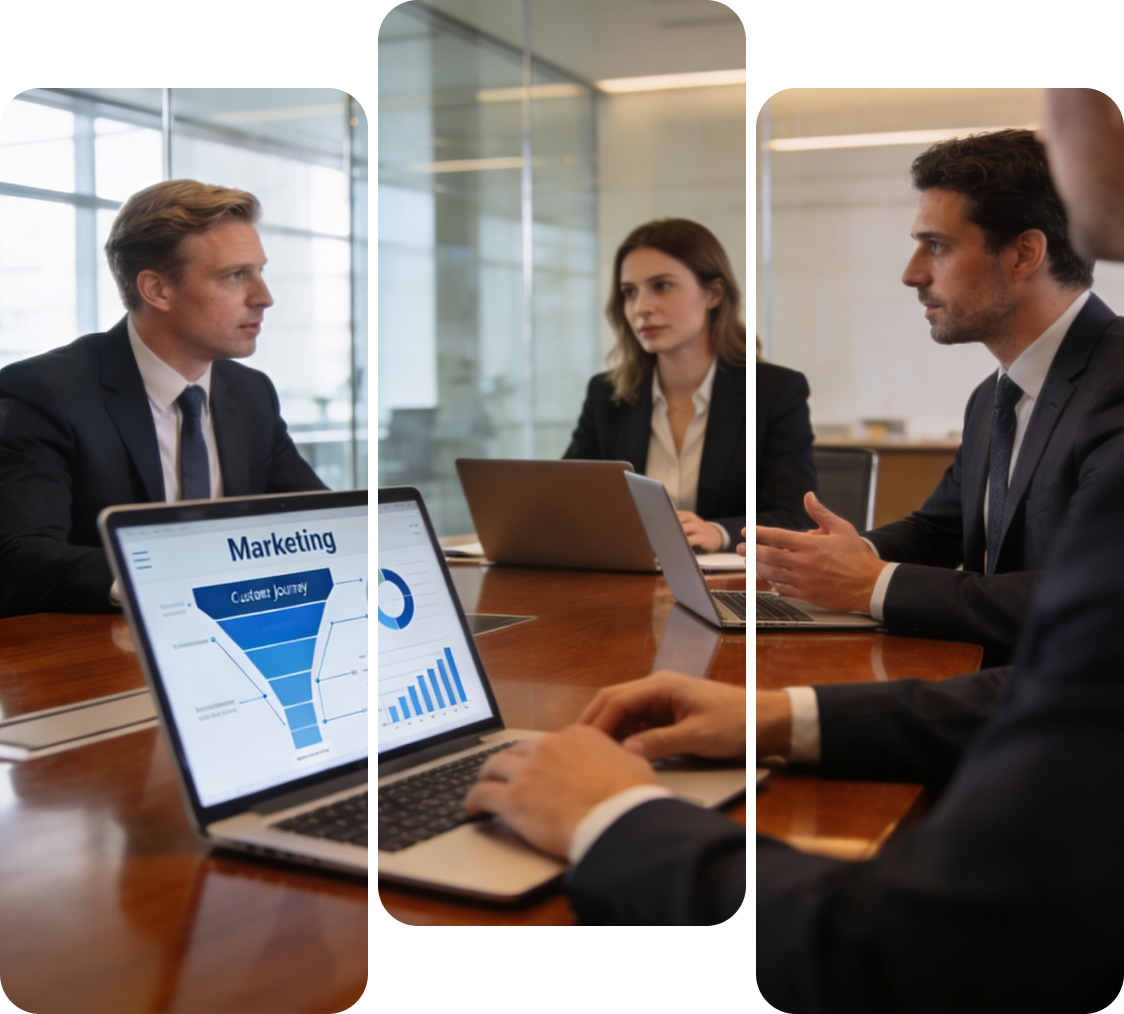
Marketing journey optimization is about improving how prospects and customers move through each stage of engagement. It focuses on the full lifecycle, so every interaction has a clearer purpose, better timing, and a stronger connection to business outcomes.
We review the full journey across awareness, consideration, conversion, onboarding, retention, and re-engagement. Our team identifies friction, drop-offs, weak messaging, poor timing, and missed opportunities that slow progression across channels and lifecycle stages.
Once the strategy is clear, we implement it inside Salesforce. We use Salesforce Marketing Cloud Journey Builder and Pardot / Account Engagement Engagement Studio to turn optimized journey planning into structured automation that supports better movement and engagement.
Journey Builder helps us create cross-channel journeys that respond to customer behavior in real time. We use it to improve audience flow, messaging logic, triggers, and timing across email, SMS, push, ads, and other connected touchpoints.
Engagement Studio supports B2B nurture journeys built around lead score, lifecycle stage, and buyer activity. We optimize rules, branches, wait steps, and follow-up logic so prospects move forward with stronger relevance and better sales alignment.
Our marketing journey optimization services connect lifecycle strategy with Salesforce execution. We review how journeys perform, where they break, and how they should improve. Then, our team builds those improvements inside Salesforce Marketing Cloud and Pardot / Account Engagement to support better engagement, progression, and conversion.
Journey Audit and Lifecycle Assessment: We review current journeys, lifecycle gaps, weak logic, outdated content, and missing stage coverage across your Salesforce environment.
Customer and Prospect Journey Mapping:We map real audience movement across stages, messages, decisions, and systems to create a clearer optimization baseline.
Touchpoint and Funnel Stage Analysis: We study funnel performance, drop-offs, delays, and conversion points to find where journey improvement matters most.
Audience Segmentation and Targeting Strategy:We refine audience groups using lifecycle, behavior, profile, and intent data for stronger targeting and journey relevance.
Lead Scoring and Grading Optimization:We improve scoring and grading models so sales receives better-qualified leads at the right moment.
Personalization and Dynamic Content Strategy:We introduce personalized content based on role, stage, interest, and engagement to improve message relevance.
03.Journey Builder Strategy and Setup:We design Journey Builder flows with stronger entry logic, decision paths, waits, goals, and exit rules.
Engagement Studio Optimization: We improve Engagement Studio logic, branching, timing, and progression so B2B nurture journeys move prospects forward.
Lead Nurture Journey Design: We build nurture programs aligned to funnel stages, buyer intent, and conversion-focused content progression.
Email Journey Automation:We structure automated email flows with clearer purpose, timing, and response-based follow-up across lifecycle stages.
Cross-Channel Journey Orchestration:We connect email, SMS, push, ads, and other channels into one coordinated Salesforce journey experience.
Trigger-Based and Behavior-Based Automation: We build automations that respond to real actions, signals, score changes, and CRM activity.
Onboarding Journey Design:We create onboarding journeys that guide new users toward activation, adoption, and early value.
Conversion and Retention Journey Planning: We build journeys that support decision-making, strengthen retention, and respond better to customer lifecycle signals.
Re-Engagement and Win-Back Strategy:We design win-back journeys for inactive leads and customers with better timing, offers, and recovery paths.
Handoff Optimization Between Marketing and Sales: We improve lead handoff rules, routing logic, and sales context for better follow-up and conversion.
Reporting, Analytics, and Journey Measurement:We build reporting frameworks that track engagement, progression, conversion, and journey performance more clearly.
A/B Testing and Ongoing Refinement: We test content, timing, paths, and logic regularly to improve journey performance over time.
Many businesses already use campaigns, automations, nurture programs, and Salesforce tools. However, results still fall short because the issue is usually not the technology. It is how journeys are planned, connected, timed, and improved across the customer lifecycle.
When channels run separately, the overall journey becomes inconsistent and harder to manage.
Challenge:
Email, SMS, ads, website activity, and sales outreach often work in silos. Prospects may receive mixed messages, poor follow-up, or no communication during key handoff stages.
How We Solve:
We connect channels into one structured journey. Our team aligns messaging, timing, and automation through Salesforce Marketing Cloud and Pardot / Account Engagement for a smoother experience.
Even strong campaigns can fail when timing does not match audience behavior.
Challenge:
Messages are sent too early, too late, or in the wrong order. This lowers trust, weakens engagement, and reduces conversion opportunities.
How We Solve:
We optimize triggers, timing, and sequence logic using Journey Builder and Engagement Studio so journeys respond better to real engagement signals.
Generic campaigns often lead to lower engagement and slower progression.
Challenge:
When messaging ignores stage, interest, or past behavior, audiences lose interest and journeys become less effective.
How We Solve
: We improve segmentation, targeting, and dynamic content so communication feels more relevant at every lifecycle stage.
Many journeys lose momentum after contacts enter automation flows.
Challenge:
Leads stop progressing, disengage, or remain stuck in nurture programs without clear next steps or recovery paths.
How We Solve:
We rebuild nurture logic with better triggers, decision paths, and re-engagement flows that keep prospects moving.
Journey performance suffers when handoffs between teams are unclear.
Challenge:
Sales receives leads at the wrong time or without enough context, while marketing lacks visibility after handoff.
How We Solve:
We improve scoring, readiness rules, and handoff workflows so marketing and sales work from one connected process.
Many businesses use Salesforce tools, but only a small portion of their capability.
Challenge:
Journey Builder and Engagement Studios often rely on static flows with limited branching and weak automation logic.
We follow a structured process that connects strategy, Salesforce execution, and measurable improvement. Our team studies your current journey performance, redesigns the right lifecycle flow, builds it inside Salesforce, and keeps refining it as audience behavior and business needs change.
Marketing journey optimization is most valuable for businesses that already use Salesforce but are not seeing the engagement, progression, or lifecycle results they expect. We work with teams that need stronger journey logic, better automation performance, and clearer movement across customer and prospect stages.
We help B2B teams managing longer, multi-touch journeys that depend on lead scoring, nurture logic, and stronger alignment between marketing and sales. Our team improves how prospects move through Pardot / Account Engagement and Salesforce-driven lifecycle programs.
We support B2C brands that need better onboarding, retention, loyalty, and re-engagement journeys across channels. Using Salesforce Marketing Cloud, we help create more connected customer experiences through email, SMS, push messaging, and cross-channel journey orchestration.
We work with SaaS businesses that need to improve trial-to-paid conversion, activation, product adoption, renewal, and churn prevention. We optimize lifecycle journeys so customer and prospect movement is based on behavior, timing, stage, and business goals.
We help CRM, Marketing Ops, and Revenue Operations teams improve journey architecture, segmentation, automation logic, and reporting visibility. Our team strengthens Salesforce performance so marketing journeys support better engagement, cleaner handoffs, and more measurable pipeline impact.
We bring together journey strategy and Salesforce execution in one service. That matters because many teams can configure automation, but fewer can diagnose why journeys underperform, redesign the lifecycle properly, and then build the solution inside Salesforce with measurable business impact.
Our team works with Salesforce Marketing Cloud and Pardot / Account Engagement at a practical level, not just a surface level. We understand how Journey Builder and Engagement Studio should be structured, where automation creates value, and where weak setup can limit results.
We do not begin by adding more automation. We first look at where your journeys are breaking, why progression slows, and what needs to change across timing, messaging, audience flow, and lifecycle design before we build anything inside Salesforce.
We optimize journeys across acquisition, nurture, conversion, onboarding, retention, and re-engagement. Our team supports both B2C journey execution in Salesforce Marketing Cloud and B2B journey optimization in Pardot / Account Engagement, giving you broader lifecycle coverage.
We build journey optimization around business outcomes, not isolated campaign activity. That includes lead quality, sales handoff timing, scoring logic, reporting visibility, and performance measurement so improvements are tied to engagement, conversion, and return on Salesforce investment.
The purpose of journey optimization is measurable improvement across engagement, conversion, retention, and lifecycle movement. We focus on building journeys that perform better inside Salesforce, so your marketing programs create clearer progression, stronger coordination, and more value from every customer and prospect interaction.
Automation alone does not fix poor lifecycle flow. We help you design and optimize journeys that are better timed, better connected, and more relevant at every stage. The result is stronger engagement, smoother progression, and better business outcomes.
Marketing Journey Optimization Services
Most marketing journeys leak engagement at predictable points. VALiNTRY360's team holds Marketing Cloud Engagement Specialist, Account Engagement Consultant, Account Engagement Foundations, and Platform Administrator certifications, so we analyze each step, entry rule, and decision split, then test timing, content, and channel changes that move more customers forward. Your journeys convert better with every iteration, with a Salesforce-Branded Partner since 2018.
If engagement is low, leads stop progressing, conversions feel slower than expected, or customers drop off between stages, your journeys likely need optimization. These are common signs that flow, timing, or automation logic needs improvement.
Yes. Journey optimization focuses on improving lifecycle flow, audience movement, timing, and decision logic. Marketing automation setup is the execution part, where those improvements are built and delivered inside Salesforce platforms.
Yes. In many cases, we improve existing Salesforce Marketing Cloud or Pardot / Account Engagement environments without rebuilding everything. We often refine journey logic, segmentation, timing, and reporting within the current setup.
The timeline depends on journey complexity, the number of audiences involved, and how mature the current Salesforce setup is. Smaller optimization projects may move quickly, while broader lifecycle redesigns usually take longer.
No. We support mid-sized businesses, growth-stage companies, and enterprise teams. Any organization using Salesforce Marketing Cloud or Pardot / Account Engagement can benefit when journey performance, lifecycle progression, or engagement needs improvement.
Yes. We review nurture structure, messaging, timing, scoring, and progression logic to find what is slowing movement. Then we improve the journey so leads move forward with better relevance and clearer conversion paths.
Yes. We optimize post-conversion journeys such as onboarding, adoption, retention, renewal, upsell, and re-engagement. This helps businesses improve customer experience after the sale and reduce drop-off across later lifecycle stages.
That depends on the journey, but common metrics include engagement rate, progression rate, conversion rate, retention, reactivation, pipeline contribution, and return on Salesforce investment. We align measurement with your actual business goals.
Yes. We identify where leads are being lost, delayed, or left without follow-up. Then we improve triggers, progression paths, and handoff logic so fewer opportunities disappear between stages or teams.
Yes. We optimize journeys across email, SMS, push notifications, paid media, CRM tasks, and other connected touchpoints. The goal is to create a more coordinated experience across channels, not isolated campaign activity.
Yes. We support B2B lead nurture and sales-aligned prospect journeys, as well as B2C onboarding, retention, loyalty, and win-back journeys. Our team works across both Salesforce Marketing Cloud and Pardot environments.
Sometimes, but not always. Existing content can often be reused if the structure is strong. However, many journeys perform better when messaging is updated to match lifecycle stage, audience intent, and timing.
Yes. We improve scoring models, readiness criteria, handoff timing, routing logic, and follow-up visibility. This helps marketing and sales work from the same progression model instead of operating through disconnected processes.
It can work either way. Some businesses start with a focused audit and redesign, while others continue with ongoing support to refine journeys, test improvements, and respond to changing audience behavior over time.
Yes. We work across the full lifecycle, including first-touch engagement, nurture, conversion, onboarding, retention, and re-engagement. That allows us to improve how both prospects and customers move through your brand experience.