
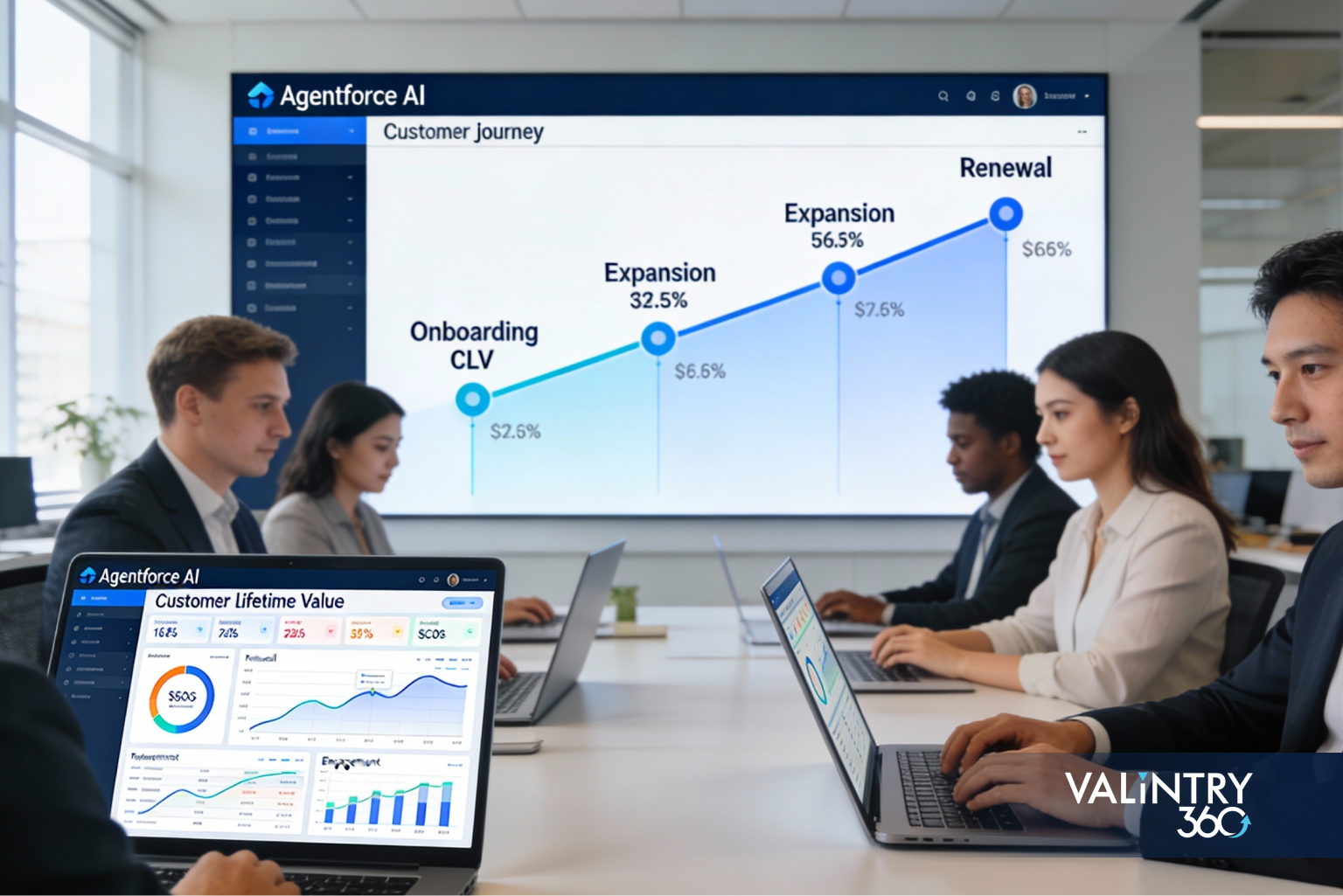
- Agentforce
Businesses that focus on increasing customer lifetime value achieve stronger stability and long-term success in competitive markets. When customer value becomes a strategic priority, organizations see better engagement, stronger loyalty, and steadier revenue flow. However, maintaining consistency remains a challenge, as uneven product quality, delayed service, and fragmented experiences often cause customers to disengage.
We understand this challenge clearly. Customer lifetime value reflects far more than short-term transactions. It represents trust, long-term engagement, and ongoing business relationships. When calculated correctly, lifetime value highlights meaningful growth opportunities and guides smarter investment decisions. Moreover, using the right evaluation methods helps identify which customer segments deserve focused attention and added support. Throughout this blog, we explain how to calculate customer lifetime value accurately and apply Agentforce to convert these insights into measurable and sustainable business growth.
Overview
Understanding Customer Lifetime Value
Customer lifetime value stands at the center of long-term business success across industries. This concept shapes how organizations plan growth, manage relationships, and guide daily decisions. Let’s break it down clearly and explain why it deserves focused attention.
What Is Customer Lifetime Value (CLV)?
Customer lifetime value (CLV) refers to the total revenue a business can expect from a customer over the entire relationship, from the first interaction to the final transaction. Unlike short-term performance metrics, CLV provides a forward-looking view that helps forecast long-term value.
In simple terms, CLV shows not only what a customer has already spent but also what that customer is likely to contribute in the future. This outlook depends on behavior patterns such as renewal trends, product usage, engagement levels, and predictive analysis supported by modern data tools.
There are two main ways to evaluate CLV:
- Historic CLV: Measures how much a customer has already spent
- Predictive CLV: Estimates future spending using data-driven modeling
A commonly used formula to calculate CLV is: CLV = (Average Customer Revenue × Customer Lifespan) − Total Service Costs
This approach helps teams evaluate value more clearly and plan investments more accurately.
Why CLV Matters for Long-Term Growth
Understanding CLV reshapes how businesses allocate resources and build growth strategies. At first glance, it may seem like another data point. However, its impact on sustainable growth runs much deeper.
Focusing on existing customers often delivers higher returns than constant acquisition efforts. Strong customer relationships support repeat business, consistent revenue, and long-term stability. As a result, CLV helps organizations invest time and resources where impact is highest.
CLV also helps businesses:
- Identify high-value accounts for deeper engagement
- Detect early signs of churn and retention risk
- Improve decisions around acquisition spending
- Support accurate planning for staffing, inventory, and production
By prioritizing long-term customer value, organizations shift focus from short-term wins toward durable growth that compounds over time.
The Difference Between CLV and Short-Term Revenue
Traditional sales metrics often center on immediate revenue and new customer acquisition. In contrast, CLV emphasizes sustained engagement and the full value created throughout a customer relationship.
When businesses focus only on short-term sales, long-term opportunity often remains hidden. A single large purchase may appear attractive, yet smaller recurring transactions frequently deliver stronger total value over time. This broader view supports better pricing strategies, improved retention efforts, and stronger account development. One helpful planning lens compares long-term customer value with acquisition cost. When customer value consistently exceeds acquisition investment, growth remains healthy. However, when acquisition costs outweigh lifetime value, profitability weakens and sustainability becomes difficult.
Ultimately, short-term metrics highlight immediate performance, while CLV offers the long-range perspective needed to guide balanced growth strategies. By using CLV as a planning anchor, organizations create stronger alignment between customer engagement, pricing decisions, and retention investment.
How to Calculate Customer Lifetime Value

Calculating customer lifetime value combines structured formulas with thoughtful analysis. When applied correctly, these calculations become practical tools that support smarter planning, stronger investments, and better long-term business decisions.
The Basic Lifetime Value Formula
The most common CLV formula is simple and clear:
CLV = (Average Revenue Per Customer × Customer Lifespan) − Total Service Costs
This formula provides a practical estimate of how much value a typical customer delivers throughout the entire relationship.
For a simpler version, many businesses use:
CLV = Customer Value × Average Customer Lifespan
In this case, Customer Value = Average Purchase Value × Purchase Frequency.
To apply this calculation, three core inputs are required:
- Average purchase value: Total revenue during a set period divided by total purchases
- Purchase frequency: How often customers buy during that same period
- Average customer lifespan: The length of time customers continue purchasing
Some businesses also include profitability in their calculations for deeper financial insight:
CLV = Annual Profit Contribution Per Customer × Average Customer Lifespan − Customer Acquisition Cost
This version helps shift focus from revenue alone toward long-term business value.
How to Calculate Customer Lifetime Value with Real Data
Applying CLV formulas using real business data involves a simple, step-by-step process:
- Determine average order value by reviewing recent sales records
- Calculate average transaction frequency per customer
- Measure customer retention duration
- Multiply these values using the chosen formula
For example, when a customer contributes steady profit annually, stays active for several years, and requires upfront acquisition investment, CLV reflects the total long-term value minus initial cost. This calculation highlights whether ongoing engagement remains profitable.
For organizations with richer datasets, additional factors can be included:
- Profit margin levels
- Service and support costs
- Discounting factors
- Segment-based behavior patterns
This deeper view strengthens forecast accuracy and guides smarter investment strategies.
Using Predictive Models for Better Accuracy
Traditional CLV calculations rely heavily on historical averages. However, predictive models improve accuracy by estimating future customer behavior using data patterns that basic formulas cannot capture. Advanced modeling techniques evaluate spending trends, churn likelihood, and engagement signals to create forward-looking projections. These models identify which customers are most likely to remain active and generate value over time.
Machine learning systems further strengthen this approach by processing large volumes of data and detecting complex relationships. These systems focus on ranking customers by long-term potential rather than predicting exact values, which helps guide segmentation, retention planning, and engagement priorities.
For stronger predictive modeling outcomes:
- Use sufficient historical data to support pattern recognition
- Include customer interactions beyond purchases
- Test different modeling approaches
- Refresh models regularly as customer behavior shifts
Ultimately, whether using simple formulas or predictive analysis, calculating customer lifetime value offers a clearer understanding of where business investment should focus. This insight helps organizations guide engagement, prioritize retention, and build long-term value with greater confidence.
Key Metrics That Influence CLV
Understanding the core metrics that shape customer lifetime value creates a clear path for steady improvement. By tracking the right indicators, businesses gain visibility into customer behavior, uncover growth gaps, and focus efforts where long-term impact remains strongest.
Average Purchase Value and Frequency
Average purchase value (APV) reflects how much customers typically spend per transaction. When combined with purchase frequency, which measures how often customers buy, these two metrics directly shape long-term revenue performance.
The relationship is simple. When either purchase value or buying frequency increases, customer lifetime value rises naturally. For example, improving order size through relevant recommendations, bundles, or upgrades increases total revenue without relying on new customer acquisition. Purchase frequency highlights engagement behavior. Understanding how often customers return helps businesses design better communication timing, loyalty programs, and personalized offers. Tracking the time gap between purchases also helps align outreach with natural buying cycles, making follow-ups feel relevant rather than intrusive.
Customer Lifespan and Churn Rate
Customer lifespan measures how long customers remain active. This duration, combined with spending behavior, forms the foundation of most CLV calculations. The longer customers stay engaged, the stronger their total lifetime contribution becomes. Churn rate tracks how many customers stop engaging within a given period. Even small shifts in churn can create meaningful changes in lifetime value. Lower churn extends customer relationships, strengthens recurring revenue, and supports predictable growth.
In addition to visible cancellations, businesses must also monitor silent churn caused by inactivity, delayed renewals, or payment failures. These hidden losses often reduce CLV quietly unless addressed through proactive engagement and retention efforts.
User Engagement and Product Adoption
Product adoption reflects how deeply customers integrate a product or service into their daily workflow. High engagement often signals strong perceived value, which supports long-term retention.
When customers regularly use a product and achieve desired outcomes, loyalty increases naturally. On the other hand, low engagement often predicts future churn. Re-engagement programs, educational content, and timely guidance help restore momentum and reinforce product value before customers disengage.
Cost to Serve vs. Revenue Generated
Cost to serve includes all operational effort required to support customers, including service operations, infrastructure, and ongoing support resources. This cost directly affects profitability and must be weighed against revenue contribution. Strong CLV depends not only on revenue growth but also on operational efficiency. When service costs stay balanced and customer value grows steadily, long-term profitability strengthens. Retaining existing customers also reduces acquisition expense, creating healthier margins and more predictable financial performance.
How Agentforce Helps Increase CLV
Agentforce uses intelligent automation and personalized engagement to help businesses strengthen long-term customer value. By combining data insights with AI-driven actions, Agentforce supports deeper relationships, higher retention, and consistent growth.
Automating Customer Segmentation and Targeting
Agentforce simplifies customer segmentation by grouping audiences automatically based on behavior, usage patterns, and purchase activity. This unified customer view supports consistent engagement across channels while reducing manual effort.
Key benefits include:
- Automated audience grouping using real-time data
- Unified customer profiles across all touchpoints
- Adaptive targeting based on engagement behavior
- Improved relevance in campaign delivery
This structured segmentation helps businesses focus attention where impact remains highest.
Personalizing Experiences with AI Agents
Personalization plays a vital role in long-term customer engagement. Agentforce supports real-time personalization by allowing AI agents to interact directly with customers across digital channels.
Core advantages include:
- Personalized recommendations based on usage and purchase history
- Real-time responses to customer questions
- Adaptive journey mapping across channels
- Context-aware support interactions
These experiences feel natural, timely, and relevant, helping customers stay engaged longer.
Tracking Behavior and Predicting Churn
Agentforce continuously monitors user behavior to identify early warning signs of disengagement. By detecting subtle changes in activity, the platform supports proactive retention efforts.
Key capabilities include:
- Early identification of churn risk
- Behavior-based engagement scoring
- Automated re-engagement messaging
- Personalized recovery strategies
This early detection helps preserve relationships before customers disengage completely.
Optimizing Upsell and Cross-Sell Opportunities
Agentforce identifies opportunities to increase account value through intelligent recommendations aligned with customer needs.
Key actions include:
- Relevant upsell suggestions based on usage trends
- Cross-sell guidance for complementary offerings
- Personalized bundles that align with buying behavior
These actions improve order value while maintaining relevance and trust.
Reducing Support Costs with Intelligent Automation
Agentforce also improves operational efficiency by automating routine service interactions. This allows support teams to focus on complex cases that require deeper attention.
Key benefits include:
- Automated handling of routine inquiries
- Faster response and resolution cycles
- Reduced operational workload
- Improved service experience consistency
By balancing revenue growth with cost efficiency, Agentforce supports stronger customer relationships and healthier long-term profitability.
Best Practices for Using Agentforce to Maximize CLV
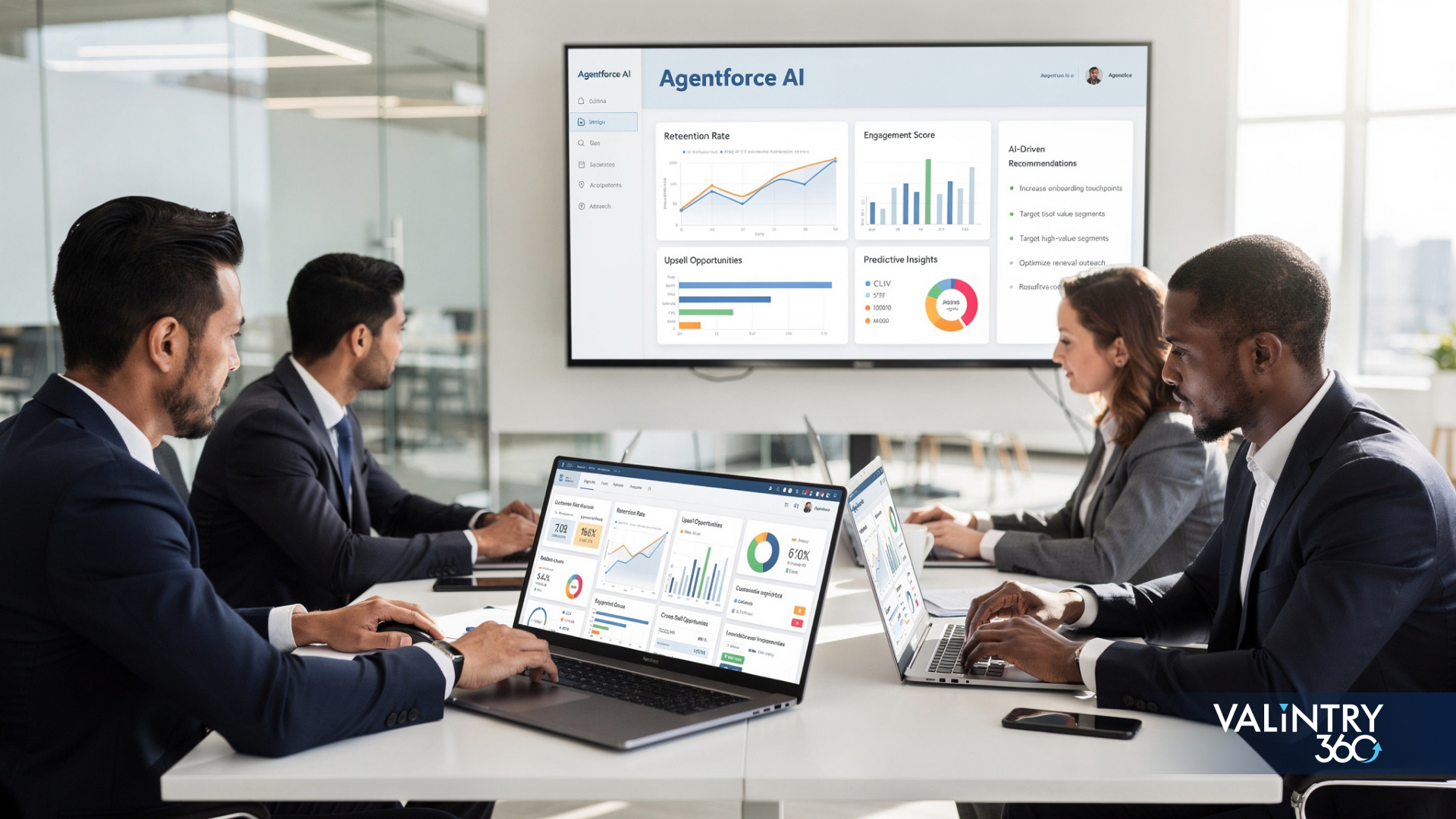
To gain consistent value from Agentforce’s AI capabilities, businesses must follow structured best practices that align technology usage with real customer needs. When applied with purpose and discipline, Agentforce supports steady CLV growth, stronger engagement, and long-term business stability.
Aligning CLV Goals with Business Strategy
The first step is defining what success looks like across customer retention, service efficiency, and operational performance, rather than focusing only on system availability. CLV goals should connect directly with broader business priorities to ensure AI adoption supports meaningful outcomes.
To achieve this alignment:
- Define clear retention and engagement targets
- Link CLV objectives with revenue and service goals
- Avoid automation without a clear business purpose
- Involve leaders from service, sales, marketing, and IT during planning
This strategic alignment helps ensure that AI initiatives support long-term customer value instead of isolated automation tasks.
Integrating Agentforce with Your CRM
Agentforce works best when embedded within your existing business systems. Instead of replacing workflows, it strengthens them through automation, data integration, and real-time updates.
For successful integration:
- Outline goals for automating service queries and workflows
- Improve data collection accuracy across all touchpoints
- Maintain real-time synchronization across connected systems
- Support consistent and complete customer records
This integration allows AI agents to deliver timely, relevant actions based on dependable customer data.
Monitoring Performance and Adjusting Tactics
Continuous monitoring helps teams measure effectiveness and refine execution. Clear visibility into service activity allows faster detection of patterns, gaps, and opportunities for improvement.
Key indicators to monitor include:
- Platform usage and adoption levels
- Automated resolution success
- Customer-confirmed outcomes
- Satisfaction trends
- Frequency of handoffs to human teams
A centralized dashboard helps teams review performance regularly and adjust workflows based on real interaction data.
Training Teams to Act on CLV Insights
Technology alone does not increase customer value. Teams must understand how to apply insights effectively in daily operations. Structured training supports confident execution and consistent performance.
Effective training approaches include:
- Role-based learning sessions
- Hands-on simulations and scenario exercises
- Regular skill refresh cycles
- Continuous feedback and improvement loops
This learning framework helps teams translate insights into action, strengthening engagement, retention, and long-term customer loyalty.
Conclusion
Customer lifetime value plays a central role in building steady and long-term business growth. By focusing on CLV, organizations gain deeper insight into customer behavior, engagement patterns, and long-term relationship value. This approach moves beyond short-term revenue thinking and supports smarter planning, stronger loyalty, and more predictable performance.
Agentforce strengthens this strategy through intelligent automation, personalized engagement, and data-driven insight. Its capabilities help businesses improve customer segmentation, support meaningful interactions, identify early churn signals, and expand account value through relevant upsell opportunities. At the same time, automated service workflows reduce routine workload, allowing teams to focus on complex, high-impact interactions that strengthen trust and long-term relationships.
Core benefits of using Agentforce for CLV improvement include:
- Stronger customer engagement and retention
- Smarter segmentation and personalized experiences
- Early identification of churn risk
- Improved upsell and cross-sell opportunities
- Reduced service workload through automation
- Better CRM data accuracy and visibility
- Continuous performance improvement through monitoring
- Stronger team execution through structured training
When aligned with business goals, Agentforce becomes more than a system. It becomes a strategic foundation for long-term value creation. By combining structured processes, accurate data, and consistent team execution, organizations can build lasting customer relationships that support stable growth and competitive advantage.
Related Posts
- Agentforce
Agentforce vs Salesforce Flow: Which Should You Use…
Your Salesforce org may already depend on Flow for record updates, approval routing, notifications, scheduled jobs, guided screens, and other repeatable processes. Each path is configured in advance, so the system follows the same rules whenever the same conditions appear.Agentforce…
- Agentforce
Agentforce Readiness Checklist: Is Your Salesforce Org Ready?
Agentforce reads whatever your Salesforce org already contains, and it acts through the automation you've already built. That inheritance is the whole readiness problem, in one sentence.An agent inherits your duplicate contact records, your too-wide permission sets, and that Flow…
- Agentforce
Agentforce Implementation Cost in 2026
Salesforce publishes a price for a credit, a conversation, a user license, and a resolved case. Those numbers price the meter.Your project is everything that happens before the meter starts running: defining the process, cleaning the records the agent will…